Hamburger: A Fun Font for Playful, Food-Themed Designs
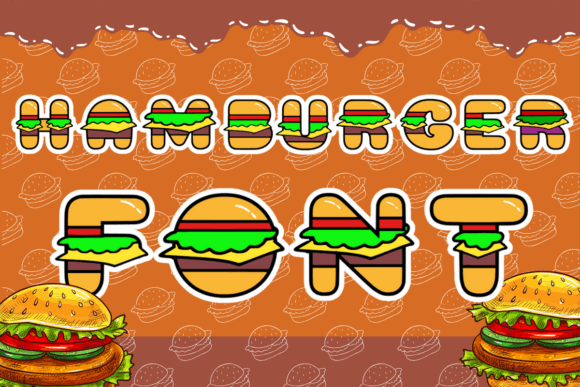
If you're tired of the same old sans serif font for every project and need something that instantly communicates fun, whimsy, and a love of food, let me introduce you to Hamburger. This isn't just another display font; it's a full-course meal of a typeface. Each letter is meticulously crafted to resemble a delectable hamburger, complete with textured buns, layered patties, crisp lettuce, melted cheese, and other savory details. The result is a creative font that’s bursting with personality, perfect for grabbing attention and setting a lighthearted, appetizing tone.
As a designer, I appreciate typefaces that tell a story at a glance. Hamburger does this effortlessly. It’s a premium font designed for impact, not for body text. Its strength lies in its ability to inject immediate joy and thematic clarity into a project. Think of it as a design asset that does heavy lifting for you—no lengthy explanations needed. When you use Hamburger, you’re not just choosing letters; you’re choosing a mood, a theme, and a guaranteed smile from your audience.
Where This Creative Font Truly Shines
Hamburger is a specialist. Trying to use it for a corporate annual report would be a disaster, but deploying it in the right context is pure magic. Its applications are vast for anyone in the food, entertainment, or family-oriented space. For restaurant branding, it’s a no-brainer. Imagine this typeface on a burger joint’s logo design, menu headers, or loyalty punch cards. It builds instant brand identity and sets a casual, welcoming atmosphere before a customer even walks through the door.
Beyond the obvious, consider its power in marketing and publishing. Food bloggers and recipe developers can use Hamburger for eye-catching social media graphics, especially for Instagram Stories or Pinterest pins where first impressions are everything. For packaging design on artisanal snack boxes or kids’ meal toys, it adds a layer of playful professionalism. Small business owners selling BBQ sauces, spice rubs, or even cooking utensils can leverage this font to create a cohesive and memorable brand identity that stands out on crowded shelves.
Even in digital spaces, its role is clear. While you wouldn’t build an entire website with it, Hamburger is perfect for web design elements like sale banners, newsletter sign-up headers, or call-to-action buttons for food delivery services. It’s also a fantastic choice for personal projects: creating custom t-shirts for a family reunion, designing invitations for a summer cookout, or crafting unique birthday party decorations. The key is using it as a headline or accent font, where its detailed personality can be fully appreciated without compromising overall readability.
Making Hamburger Work in Your Design System
Introducing a font as distinctive as Hamburger into your toolkit requires a bit of strategy. First, evaluate the project fit. Does your audience appreciate humor and nostalgia? Is the subject matter inherently fun? If the answer is yes, you’re on the right track. For projects requiring utmost seriousness or legal precision, you’ll want to stick with a more neutral serif font or sans serif font.
Next, consider font pairing. This is crucial. Hamburger’s intricate, illustrative style demands a simple, clean partner. Pair it with a strong, geometric sans serif font for body text or secondary information. A clean sans serif provides the necessary visual hierarchy and ensures your message remains clear and professional. Avoid pairing it with other decorative or script fonts, as that will create visual chaos. Think of Hamburger as the star of the show, and its partner as the reliable supporting actor.
Always review the included styles and character set. A quality premium font like Hamburger often comes with alternates, ligatures, or additional glyphs that can add even more flair. Test these in your designs to see if they enhance your layout. Readability is your final checkpoint. At very small sizes, the fine details of the burger ingredients might get lost, becoming visual noise. In those cases, it’s better to use the font at a larger scale where its charm is fully visible. For commercial use, ensure you have the correct license for your intended application, whether for client work, merchandise, or digital products.
Elevating Brand Perception with a Thematic Typeface
The right font choice does more than just display words; it shapes perception. Using Hamburger strategically can significantly enhance audience engagement. It signals that a brand doesn’t take itself too seriously, that it values creativity, and that it understands its niche audience. For a small business, this level of recognition is invaluable. It turns a simple advertisement into a shareable piece of content because it’s visually interesting and emotionally resonant.
In a world saturated with generic modern typography, a well-chosen display font like Hamburger becomes a powerful tool for differentiation. It contributes directly to a consistent and professional brand identity when used correctly across all touchpoints—from the logo to the social media graphics to the packaging. It shows intentionality and a deep understanding of your market. So, if your next project calls for a dose of fun, a sprinkle of nostalgia, and a whole lot of flavor, consider giving Hamburger a seat at your design table. It might just be the secret ingredient your creative work has been missing.